

Author: Rahul — Founder, Stalkus Digital (digital transformation & performance marketing for logistics and supply-chain businesses)
Belgian logistics companies operate at the crossroads of Europe’s busiest trade corridors. That scale brings opportunity — and complexity. Many firms silently concede ~15–25% of potential revenue every year to inefficiencies that are fixable with the right combination of process redesign and AI-powered automation. This blog explains the five largest, evidence-backed revenue drains affecting companies in Belgium, shows how AI and workflow automation directly eliminate each one, and gives a practical, step-by-step plan to start capturing that lost margin within months.
Where I say “Belgian logistics,” I’m referring to operators working across the country’s hubs and cross-border flows — ports, road haulage, warehouses and last-mile delivery in Belgium.
Quick TL;DR (for busy ops directors)

- Top 5 revenue leaks: driver shortage & capacity costs; manual paperwork & documentation errors; billing/invoicing mistakes; operational disruptions (delays & demurrage); weak data & forecasting (waste from poor planning).
- Evidence: driver shortages and paperwork errors are major, measurable pain points across Europe and in Belgium. (iru.org)
- Fix: target high-impact processes with pragmatic AI + workflow automation (IDP for documents, AI route & capacity optimization, invoice-to-cash automation, automated alerts + orchestration). McKinsey and industry studies show automation rapidly pays back and reduces freight and handling costs. (McKinsey & Company)
- Next step: run a 6-week quick-win sprint (process mapping, pilot an IDP + invoice automation, measure % recovered). See the implementation checklist at the end.
Why ~20%? — how that number adds up
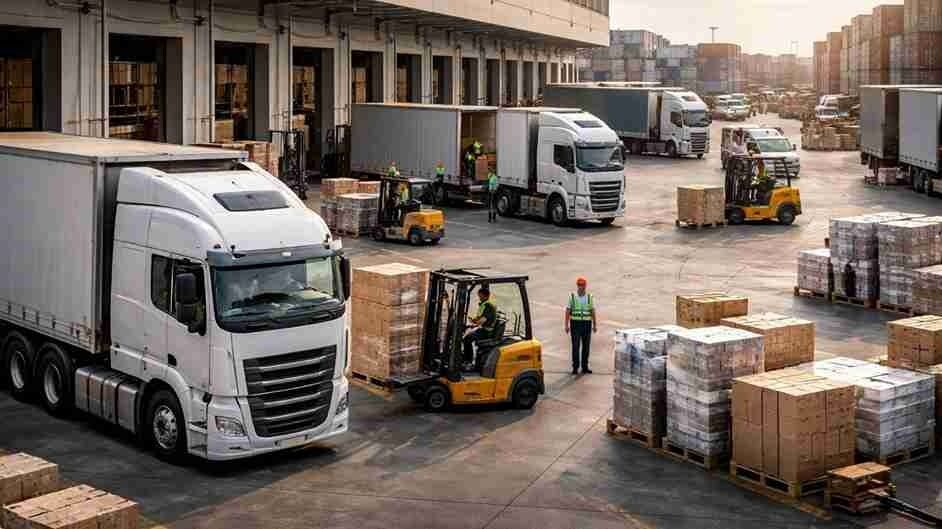
When you add small, persistent losses across many processes — empty kilometers, lost shipments, misbilled invoices, demurrage, and lost customers — the aggregate hit to revenue routinely reaches double digits. Independent sector studies show that recurring disruptions translate directly into lost capacity and extra cost; for many firms this equates to a monthly drag that compounds yearly. (Logistics Business)
Below are the five highest-impact causes, their mechanics, supporting evidence, and the exact AI/workflow levers that stop the leak.
1) Driver shortage & ad-hoc capacity lifts → inflated transport cost and missed contracts
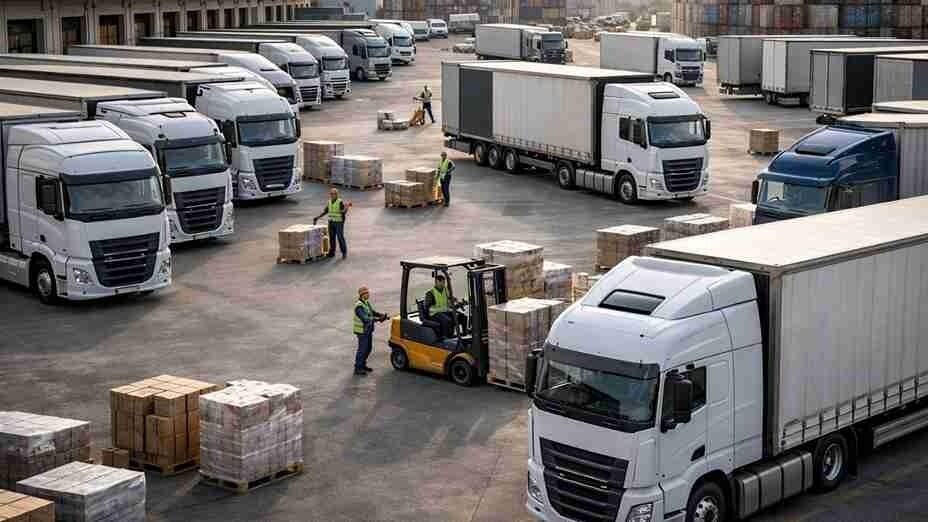
What happens: When you can’t staff trucks, you pay premiums for spot capacity, accept suboptimal routing, and decline new business — or accept lower margins to keep clients. Belgium is part of the wider European driver shortage trend (structural ageing of the workforce, regulatory friction, fewer young recruits), so capacity costs and forced subcontracting push unit transport costs up. (iru.org)
How it costs ~revenue: premium haulage rates on weekends/short notice, increased dwell times while hunting drivers, and reputational churn when service levels drop. These add variable cost and reduce quote-to-win on new tenders.
AI + workflow fixes
- Automated capacity orchestration: central platform that matches incoming loads to owned fleet, verified subcontractors, and dynamic spot offers using rules and historical reliability scoring.
- Predictive capacity planning: demand forecasting (ML) combined with contract scheduling prevents last-minute buys.
- Driver scheduling assistant: AI that proposes schedules optimizing hours-of-service and reduces idle time.
Expected outcome: fewer premium spot purchases, higher asset utilization, and improved on-time performance — immediate cost avoidance and recovered margin within months.
2) Manual paperwork & documentation errors → delays, fines, lost shipments

What happens: Customs forms, bills of lading, HS codes, addresses and signatures — when processed by hand they generate errors that stop shipments at borders or create compliance penalties. A recent sector survey shows that a substantial share of shipment delays are caused by document errors, and many executives reported revenue opportunities lost because manual admin slowed onboarding or scale. (Trans.INFO)
How it costs ~revenue: delayed deliveries → demurrage and detention fees, missed SLAs → client penalties or lost contracts, slower onboarding → missed revenue windows.
AI + workflow fixes
- Intelligent Document Processing (IDP): OCR + ML to extract structured data from invoices, bills of lading, and customs docs with validation rules (HS code lookups, address normalization).
- Automated validation workflows: documents automatically cross-checked against expected values; exceptions routed to a single queue with SLA rules.
- E-signature & portal onboarding automation: reduce manual exchange by automating client onboarding documents and validations.
Evidence & impact: industry reporting links manual document issues directly to lost opportunities and compliance costs. Automating documents reduces error rates dramatically and speeds clearance. (Trans.INFO)
3) Billing & invoicing errors — missed charges and slow cash collection

What happens: Manual billing, mismatched PO/consignment data, and missed accessorial charges produce incorrect invoices. Studies indicate a high proportion of logistics invoices contain errors; every error costs time and cash to correct and delays payment. (LinkedIn)
How it costs ~revenue: lost or disputed charges, longer days-sales-outstanding (DSO), write-offs for unrecoverable items, and staff time spent on reconciliations.
AI + workflow fixes
- Automated charge capture: data pipelines that pull telemetry, booking, and proof-of-delivery into billing engines that validate against tariff rules.
- Invoice validation AI: ML models flag anomalies (missing accessorials, rate mismatches) before invoices go out.
- Automated collections workflow: triggered reminders, dispute classification, and escalation flows reduce DSO.
Expected outcome: lower error rates, faster payments, fewer write-offs — many firms recover several % of revenue by plugging invoicing leakage.
4) Operational disruptions & poor exception handling → wasted capacity and customer churn
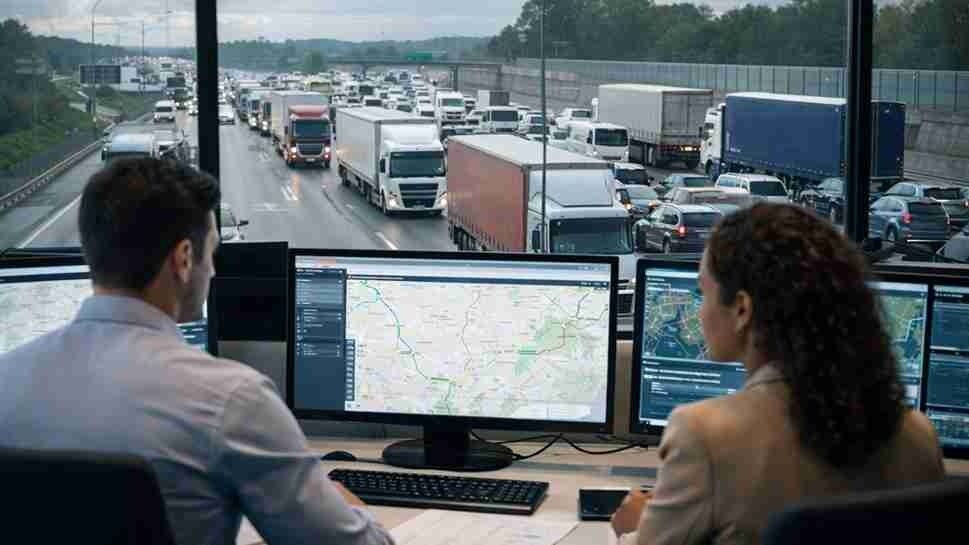
What happens: Breakdowns, congestion, weather, customs holds — disruptions are normal. What kills margin is slow or manual exception handling (no central orchestration, late customer notifications, manual rerouting). Recent industry research shows recurring breakdowns and interruptions translate directly into lost productive time and costs. (Logistics Business)
How it costs ~revenue: reactive, manual reroutes are expensive; customers penalize missed deliveries; operations spend time firefighting instead of optimizing throughput.
AI + workflow fixes
- Event-driven orchestration: integrate telematics, ETA predictions, and third-party feeds to trigger automated contingency workflows (rebook, reassign, notify customers).
- AI root-cause classification: automatically classify recurring exceptions and suggest permanent fixes (e.g., recurring congestion at a hub → alter routing).
- Customer-facing automated communication: proactive notifications reduce disputes and churn.
Result: fewer SLA breaches, less demurrage, higher customer NPS and retention.
5) Poor forecasting & fragmented data — excess inventory, deadstock, and avoidable moves

What happens: When sales, warehouse, and transport planning operate with misaligned data, you overstock, reroute, and do extra touches — each movement costs money. Weak forecasting leads to rush orders and unplanned capacity consumption.
How it costs ~revenue: excess handling and storage, elevated working capital, rush freight premiums, and inventory write-downs.
AI + workflow fixes
- Demand forecasting (ML): ingest order history, seasonality, promotions and external indicators to forecast demand at SKU x location.
- Replenishment workflows: automated purchase and transfer proposals triggered by forecast probabilities and safety stock rules.
- Integrated control-tower dashboards: unify data, expose KPI gaps, and allow automated or semi-automated interventions.
Impact: lower inventory carrying costs, fewer emergency shipments, and smoother load planning.
Proof that automation pays (short, evidence-backed)
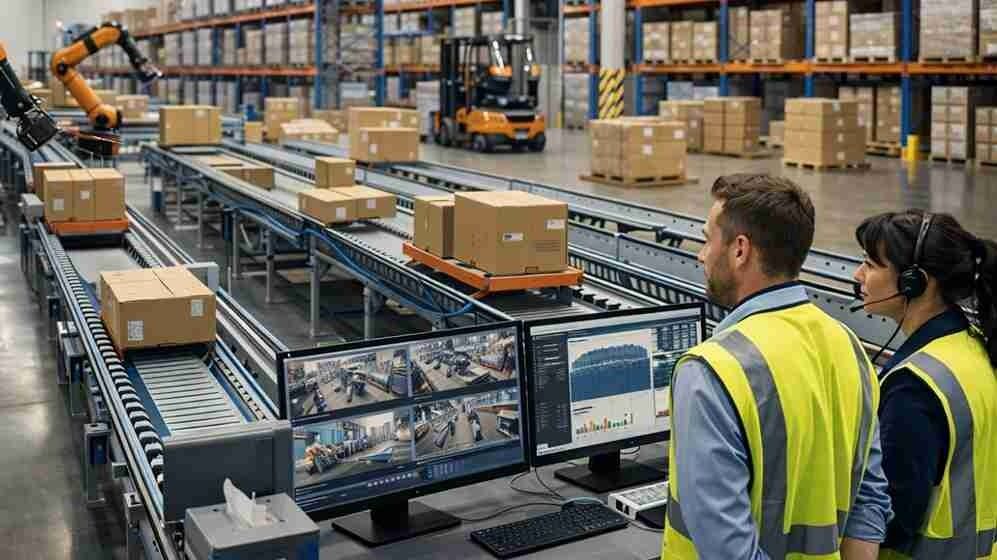
- Disruption cost & capacity loss: new research from global logistics operators shows recurring breakdowns and disruptions translate to material loss of operational capacity and revenue. Automating exception handling and orchestration reduces wasted productive time. (Logistics Business)
- Document + invoice errors: sector surveys and expert analysis show a high rate of documentation and invoicing errors; automating these processes (IDP + billing automation) dramatically reduces error rates and recovers revenue. (Trans.INFO)
- Automation investment & outcomes: management consulting research highlights automation as a high-impact lever for logistics — firms that combine robotics, IDP, and applied AI see measurable cost reductions and improved throughput. (McKinsey & Company)
A practical 6-week quick-win plan (how to start recovering revenue now)

Goal: identify and pilot automation for the top 1–2 leakage points and measure recovered revenue.
Week 0 — Prep
- Stakeholder brief: ops, finance, compliance.
- Select pilot scope (e.g., cross-border exports + invoicing).
Week 1 — Discovery (3–5 days)
- Map end-to-end process (document flow, systems, decision points).
- Quantify failure rates and average cost per failure (invoicing disputes, delayed shipments).
Week 2 — Design
- Choose tools: IDP + RPA for documents, a billing engine integration, and a lightweight orchestration layer (or use existing TMS extension).
- Define KPIs: % invoice error reduction, DSO days, hours saved, demurrage € saved.
Week 3–4 — Build & Integrate
- Configure IDP to extract fields from B/Ls, customs forms, invoices.
- Implement validation rules and exception queue.
- Wire invoice outputs to billing system (or generate validated invoice drafts).
Week 5 — Pilot live
- Run pilot on a chosen lane (e.g., Flanders → UK exports).
- Track KPI deltas daily.
Week 6 — Measure & Scale
- Analyze recovered charges and time savings.
- Iterate rules, expand to additional routes/products.
KPIs to track: recovered revenue (€/month), invoice error rate, DSO, demurrage events, on-time delivery %, staff hours reallocated.
Tech stack checklist (practical)

- IDP (intelligent document processing): OCR + ML (for B/Ls, commercial invoices, customs docs).
- Orchestration / workflow engine: event-driven (triggers on missing docs, exceptions).
- TMS + telematics integration: for live ETAs and automated rerouting.
- Billing engine + automated collections: feed validated trip data to billing.
- Analytics & forecasting (ML): demand prediction and capacity planning.
- Low-code RPA: for glue processes where APIs are missing.
Common objections (and short answers)

- “We’re too small / too complex to automate.” Start with the highest-frequency pain (e.g., invoices with errors). Small pilots often show ROI in weeks.
- “It’s expensive.” Compare to recurring costs: premium spot freight, demurrage, DSO and write-offs — automation often pays back within 3–9 months. (McKinsey & Company)
- “We don’t have data.” Start with transactional documents and event feeds — AI works with imperfect data and improves as you feed more.
Realistic ROI expectations

Case studies across Europe show meaningful savings:
- reduced freight & handling by automating planning and exception handling;
- 30–60% cut in document processing time with IDP;
- tighter billing controls reducing lost charges by several percentage points. McKinsey and sector reports highlight sizable cost reductions when automation is paired with process redesign. (McKinsey & Company)
Local context: why Belgian operators should act now
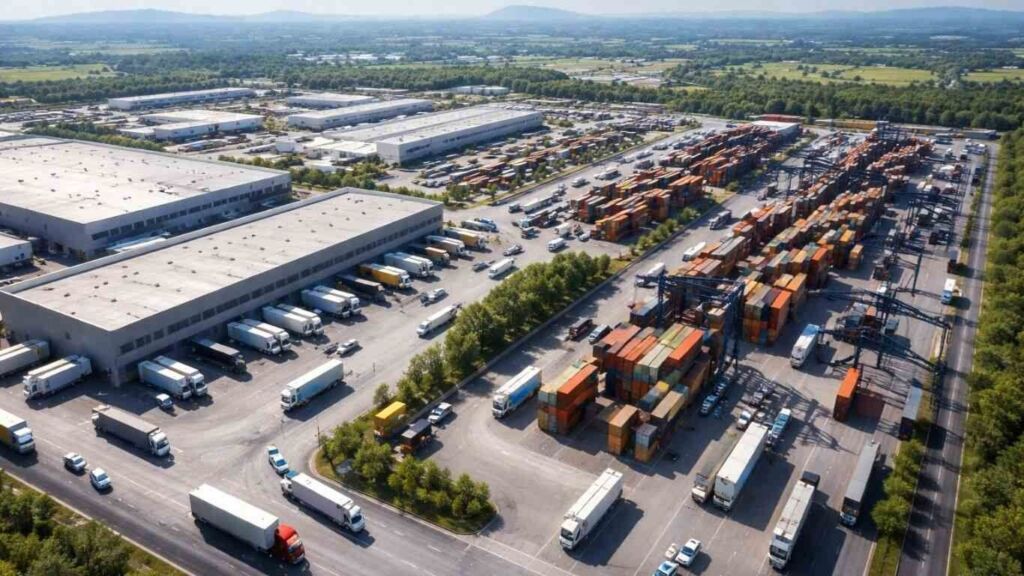
Belgian operators face stiff cross-border competition and structural cost pressure (wage and regulatory), and sector voices warn that Belgium is losing competitiveness unless productivity and administrative friction are addressed. Industry bodies and local associations recommend speeding admin processes and improving competitiveness. Automation is the most direct lever that preserves service quality while lowering unit costs. (Flows)
(If you want a one-page summary to show your CFO, I can generate that.)
SEO & Content suggestions (to use this blog as a lead magnet)

- Title: 5 Reasons Belgian Logistics Firms Lose 20% Revenue — How AI Workflows Stop the Leak
- H1/H2 structure: use clear H1 and H2 headings (this article already follows one).
- Primary keywords: belgian logistics automation, logistics AI Belgium, workflow automation logistics.
- Secondary keywords: intelligent document processing logistics, invoice automation logistics, reduce demurrage Belgium.
- Meta & schema: add Article schema and “HowTo” steps for the 6-week sprint. Include author markup (Rahul, Stalkus Digital) and organization markup for trust.
- Lead magnet flow: gated downloadable 1-page ROI calculator + a 6-week checklist (collect name, company, email). Offer a free 30-minute ops audit as CTA.
Call to action — what to do next (practical)

- Run the 30-minute ops audit. We map your single highest-loss process and estimate recoverable revenue. (If you want, I — Rahul at Stalkus Digital — can run this for you.)
- Start a 6-week pilot on invoices or cross-border document automation. Measure, refine, scale.
- Download the ROI calculator (I can produce a spreadsheet with your inputs and show expected recovered revenue within 3–9 months).
Appendix — authoritative sources & evidence

Sector analysis on invoicing/document error costs (expert commentary summarizing invoice error percentages and impact). (LinkedIn)
McKinsey — Automation in logistics: Big opportunity, bigger uncertainty (automation benefits and investment guidance). (McKinsey & Company)
DP World / industry research — new data showing recurring breakdowns and logistics disruption costs. (Logistics Business)
Trans.info — survey results linking paperwork/document errors to shipment delays and lost revenue opportunities. (Trans.INFO)
IRU / driver shortage reports — structural driver shortage data across Europe (impact on capacity/costs). (iru.org)