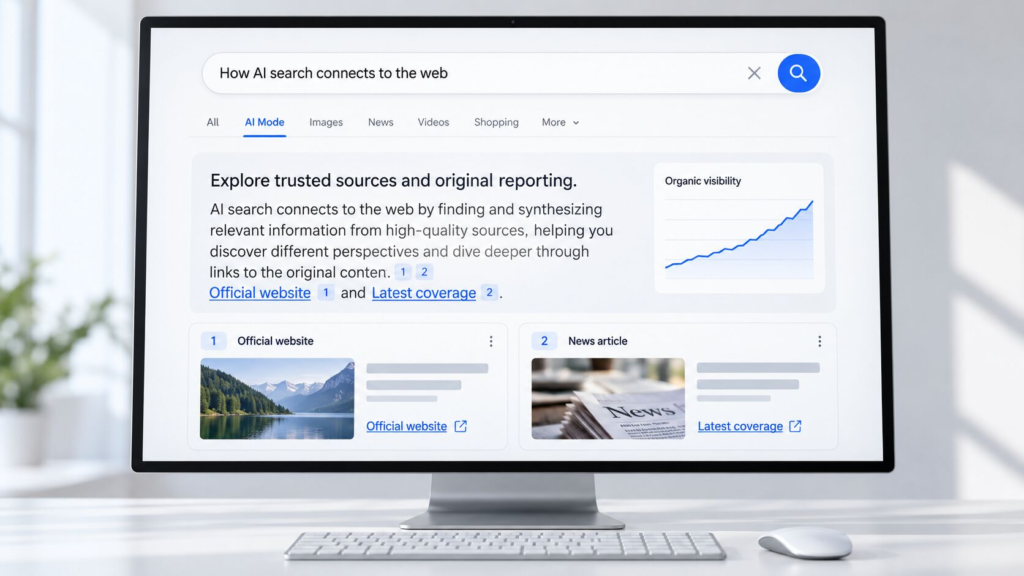
Artificial Intelligence (AI) is no longer a futuristic concept—it’s a present-day powerhouse transforming industries, and marketing is at the forefront of this revolution. From personalized customer experiences to real-time analytics, AI in digital marketing is giving businesses a significant edge in an increasingly competitive environment.
As businesses seek smarter ways to connect with customers, increase conversions, and maximize returns, AI has emerged as a game-changer. It enhances campaign targeting, enables deep personalization, and provides data-driven insights that were previously unattainable.
In this blog, we’ll explore how AI is reshaping digital marketing, the tools driving this transformation, real-world success stories, and the substantial benefits businesses are gaining by adopting AI-driven marketing strategies.
AI in Campaign Targeting: Reaching the Right Audience at the Right Time

One of the most impactful applications of AI in digital marketing is precise campaign targeting. In traditional marketing, segmenting audiences relied heavily on broad demographics and guesswork. AI eliminates the guesswork, replacing it with data-driven precision.
Precision Audience Segmentation
AI analyzes vast datasets—such as browsing history, location data, past purchases, and engagement metrics—to identify high-converting customer segments. This means businesses can create laser-targeted campaigns that resonate with specific audience behaviors and interests.
Real-Time Optimization
Gone are the days of waiting until the end of a campaign to analyze results. AI enables campaigns to adjust automatically in real time. If an ad isn’t performing well, AI will tweak the audience, creative, or timing to boost engagement—maximizing every dollar spent.
Advanced Ad Placement and Bidding
AI-powered tools like Google’s Smart Bidding and Meta’s Advantage+ campaigns optimize ad placements and bid amounts automatically. These algorithms analyze user data and market conditions to ensure that ads appear at the most effective times and placements, minimizing budget waste and maximizing conversions.
Transforming Personalization: One-to-One Experiences at Scale

Personalization is no longer optional—it’s expected. Customers demand tailored experiences, and AI delivers personalization not just effectively, but at scale.
Hyper-Personalized Content
AI analyzes individual user behaviors to create content that speaks directly to their interests and needs. Whether it’s product recommendations, email subject lines, or dynamic website content, AI in digital marketing makes personalization seamless.
Netflix, Amazon, and Spotify are pioneers in AI-driven personalization. Their recommendations are powered by sophisticated machine learning models that predict what users want based on historical and real-time data.
Automated Customer Journeys
AI enables brands to deliver timely and relevant messages at every stage of the customer journey. With tools like customer journey mapping and predictive behavior modeling, businesses can trigger emails, push notifications, or ads exactly when the user is most likely to engage or convert.
Scalability
Manual personalization can’t keep up with today’s customer expectations. AI empowers marketers to deliver one-to-one personalization to thousands—even millions—of customers simultaneously, ensuring consistency and quality across all touchpoints.
Smarter Analytics and Data-Driven Insights

One of AI’s most valuable contributions to marketing is its ability to process and interpret large volumes of data quickly and accurately. This leads to deeper insights, better decisions, and more agile campaigns.
Predictive Analytics
AI predicts future behavior based on past actions. Marketers can use predictive analytics to forecast customer lifetime value, churn risk, product preferences, and the best time to reach out—allowing for proactive strategies that maximize results.
Enhanced Campaign Measurement
With AI-powered analytics platforms, marketers no longer have to guess which efforts are driving ROI. These platforms correlate actions with outcomes in near real-time, helping teams make immediate adjustments to improve performance.
ROI Tracking and Attribution
Multi-touch attribution models powered by AI can accurately assign value to every customer interaction across channels—email, social media, search, and more. This visibility helps marketers understand which strategies deliver the best returns, guiding smarter budget allocation.
Business Benefits: The Competitive Edge of AI-Driven Marketing

Embracing AI in digital marketing is more than a tactical advantage—it’s a strategic necessity. Businesses that integrate AI technologies are reaping measurable benefits and distancing themselves from the competition.
Higher ROI
According to McKinsey, businesses using AI in their marketing efforts report 10–20% higher marketing ROI and faster revenue growth. This is largely due to better targeting, efficient resource allocation, and smarter decision-making.
Efficiency and Cost Savings
AI reduces the need for manual labor by automating repetitive tasks such as email sends, ad placements, and customer segmentation. This frees up teams to focus on strategy and creativity, while also reducing operational costs.
Enhanced Customer Experience
By delivering relevant content and real-time responses, AI improves customer satisfaction and loyalty. Chatbots, for example, can answer queries 24/7, while AI-powered personalization increases engagement and reduces bounce rates.
Business Agility
In today’s fast-moving markets, the ability to adapt quickly is critical. AI provides real-time insights that help businesses stay ahead of trends, respond to customer needs promptly, and outperform slower-moving competitors.
Case Studies: Real-World Success Stories
Several forward-thinking companies have already demonstrated the real-world impact of AI in digital marketing. Here are three notable examples:
P&O Cruises
P&O Cruises implemented AI to optimize their digital journey. By refining mobile engagement and analyzing user behavior in real-time, they increased booking conversions by 2.8%—equating to an additional £1.3 million in revenue.
Tea Collection (E-commerce)
This children’s clothing brand used AI-driven experimentation to test multiple versions of their marketing campaigns simultaneously. The result? A 5% increase in order volume and a projected $1 million in additional revenue.
Curiosity Stream (Streaming Media)
To enhance its homepage experience, Curiosity Stream used AI to test thousands of homepage design combinations. The AI-selected versions outperformed traditional designs, increasing subscriber revenue by 17% and boosting annualized revenue by over $2 million.
AI Tools Powering Digital Marketing

Here are some widely used AI-powered marketing tools transforming the industry:
- Google Performance Max – Automates ad placements across Google’s platforms using real-time data and AI.
- HubSpot’s AI features – Offers smart CRM insights, predictive lead scoring, and automated email personalization.
- Persado – Generates emotional, performance-optimized marketing copy.
- ChatGPT & Jasper AI – Helps marketers create content faster and at scale.
- Segment & Salesforce Einstein – Enables deep customer segmentation and predictive analysis.
Key Takeaways
- AI in digital marketing enables smarter targeting, deeper personalization, and advanced analytics.
- Real-time optimization and automation improve efficiency while reducing costs.
Businesses using AI report higher ROI, improved customer satisfaction, and faster growth. - Case studies from P&O Cruises, Tea Collection, and Curiosity Stream demonstrate the power of AI to drive measurable results.
- Early adopters of AI technologies are establishing dominant positions in their industries.
Conclusion
AI is not just enhancing marketing—it’s redefining it. As customers become more tech-savvy and expectations rise, traditional methods fall short. Businesses that embrace AI in digital marketing are not only meeting expectations—they’re exceeding them and setting new standards.
Whether it’s through hyper-personalized content, automated customer journeys, or predictive analytics, AI offers a sustainable competitive advantage for brands looking to grow in the digital age.
Adopting AI in marketing isn’t an optional upgrade—it’s a strategic imperative for growth, innovation, and long-term success.