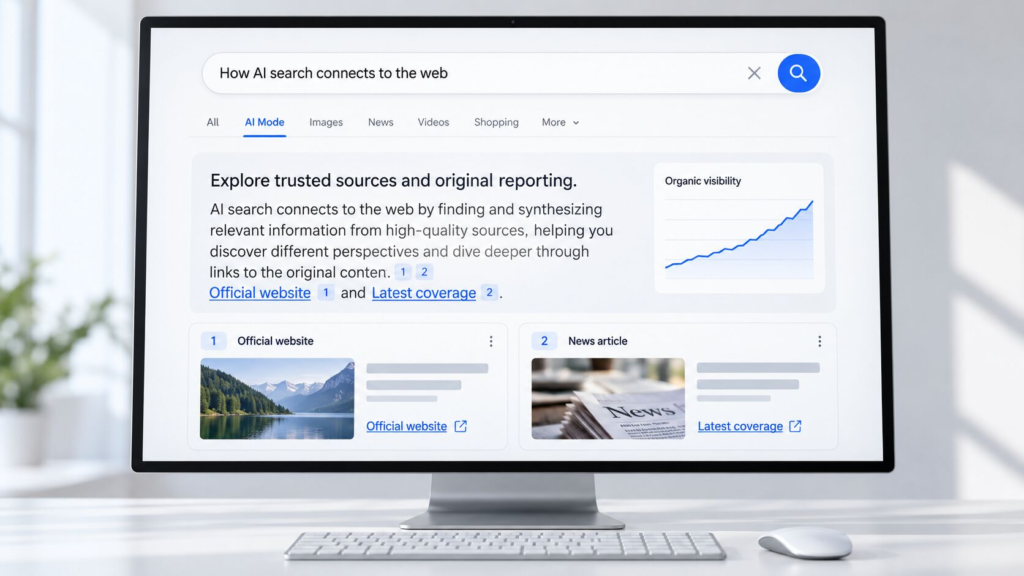

Ranking on Google without backlinks sounds unrealistic to many SEO professionals. For years, backlinks have been treated as the most powerful ranking signal. However, search engines have evolved. Today, it is absolutely possible to rank without backlinks—if you choose the right keywords and apply the right SEO strategies.
This guide explains how to rank without backlinks, when it works best, and when it does not. You will learn practical methods based on search intent, topical authority, semantic SEO, and on-page optimization.
Can You Really Rank Without Backlinks?

Yes, you can rank without backlinks—but only in specific situations.
Google uses hundreds of ranking factors. While backlinks remain important, they are not equally weighted for every search query. For many informational searches, Google focuses more on relevance, content quality, and user satisfaction.
Pages often rank without backlinks because they:
- Match search intent precisely
- Provide complete topic coverage
- Use strong on-page SEO signals
- Offer a better user experience
In such cases, backlinks become supportive rather than mandatory.
Keyword Difficulty vs Backlink Dependency
Not all keywords depend on backlinks equally.
Some keywords appear competitive but are actually served by weak or thin content. Others are controlled by authoritative domains with strong link profiles.
Keywords that commonly rank without backlinks include:
- Definitions
- How-to queries
- Educational guides
- Explanatory content
However, keywords with high commercial intent usually demand backlinks.
Search Intent as a Ranking Shortcut
Search intent is one of the strongest ranking levers.
When Google understands user intent clearly, it prioritizes pages that answer the query efficiently. If your content aligns better with intent than competitors, you can outrank stronger domains.
Intent-focused optimization includes:
- Matching content format
- Covering expected subtopics
- Answering related questions
- Improving clarity and structure
This approach is often used by businesses offering SEO Services to achieve faster, low-risk rankings.
When Ranking Without Backlinks Is Most Likely

Ranking without backlinks is not random. It follows clear patterns.
New Websites vs Aged Domains
Aged domains usually rank faster because Google already trusts them.
However, new websites can still rank without backlinks by:
- Targeting long-tail keywords
- Publishing niche-focused content
- Avoiding competitive SERPs
- Using internal topic clusters
Precision matters more than volume.
Informational vs Commercial Keywords
This distinction is critical.
Informational keywords are ideal for ranking without backlinks because Google prioritizes usefulness over authority.
Commercial keywords usually require backlinks due to competition, monetization, and trust requirements.
If a SERP is dominated by ads or brand websites, backlinks are likely necessary.
9 Proven Ways to Rank Without Backlinks

1. Build Topical Authority Instead of Single Pages
Google favors topic depth over isolated content.
Topical authority means covering a subject comprehensively through multiple interlinked articles. This strategy improves trust and relevance signals.
Steps include:
- Creating a pillar page
- Publishing supporting articles
- Interlinking related topics
This approach is commonly used in advanced content optimization services to improve visibility without link building.
2. Match Search Intent Better Than Competitors
Most pages fail because they misunderstand intent.
Analyze top-ranking pages for:
- Content format
- Depth and structure
- User expectations
Then improve clarity, flow, and usefulness. Better intent alignment often beats backlinks.
3. Optimize On-Page SEO Aggressively
When backlinks are missing, on-page SEO becomes essential.
Focus on:
- Keyword-optimized titles
- Proper H1, H2, and H3 usage
- Clean URL structure
- Internal linking
- Mobile performance
Strong on-page SEO sends clear relevance signals to Google.
4. Use Semantic SEO and NLP Terms
Google understands topics, not just keywords.
Semantic SEO includes:
- Related phrases
- Entities
- Synonyms
- Contextual relevance
Using NLP terms such as search intent, topical depth, information gain, and content relevance helps Google understand your content better.
5. Create Helpful Content That Demonstrates E-E-A-T
Thin content struggles to rank without backlinks.
Helpful content includes:
- Actionable steps
- Real examples
- Clear explanations
- Accurate information
Demonstrating experience and expertise improves trust signals naturally.
6. Optimize for Featured Snippets and PAA Boxes
Featured snippets often ignore backlink authority.
To win snippets:
- Write concise definitions
- Use numbered steps
- Add question-based headings
People also ask for boxes, reward structure, and clarity.
7. Improve User Experience and Engagement Signals
User engagement affects rankings.
Google tracks:
- Time on page
- Scroll depth
- Bounce behavior
Improve UX with short paragraphs, bullet points, and clear formatting.
8. Use Internal Linking as Synthetic Authority
Internal links distribute relevance across your site.
Best practices include:
- Linking from related content
- Using descriptive anchor text
- Strengthening topic clusters
This mimics external authority internally.
9. Publish and Update Content Faster
Freshness is a ranking advantage.
Updating content every 3–4 months with new examples and improved structure helps maintain rankings without backlinks.
Examples of Keywords That Rank Without Backlinks

Blog-Friendly Keywords
Examples include:
- What is semantic SEO
- How search intent works
- Difference between on-page and off-page SEO
These keywords rely on content quality rather than authority.
Programmatic and Knowledge-Based Keywords
These include:
- Industry definitions
- Feature explanations
- Process breakdowns
Structured content performs well in low-competition SERPs.
When Backlinks Are Still Necessary

Backlinks are still required for:
- YMYL niches
- Competitive commercial keywords
- Brand-dominated SERPs
Knowing when backlinks are unavoidable prevents wasted effort.
Rank Without Backlinks vs Traditional Link Building

| Factor | Without Backlinks | Traditional SEO |
| Speed | Faster | Slower |
| Cost | Lower | Higher |
| Risk | Minimal | Moderate |
| Scalability | High | Limited |
Content-led SEO scales more efficiently for TOFU growth.
Frequently Asked Questions (FAQs)
Can you rank without backlinks?
Yes. Informational and long-tail keywords can rank without backlinks.
What type of keywords rank without backlinks?
Definitions, how-to guides, and explanatory content.
Is topical authority more important than backlinks?
For informational SEO, topical authority often outweighs backlinks.
Do new websites need backlinks to rank?
Not always. New sites can rank with precise targeting.
Are backlinks still important for SEO?
Yes. They are essential for competitive and commercial keywords.
Final Takeaways + SEO Reality Check
Ranking without backlinks is possible when you:
- Choose the right keywords
- Optimize search intent
- Build topical authority
- Apply strong on-page SEO
Backlinks still matter, but they are not always required.
Smart SEO is about knowing when you don’t need links.
Let Stalkus Digital help you build intent-driven, authority-focused SEO strategies that deliver sustainable growth.