

In today’s fast-paced digital ecosystem, the way consumers shop has evolved dramatically. Social media platforms—once solely hubs for connection and content—have now become robust commerce engines. This transformation has given rise to social commerce, a dynamic approach that integrates product discovery, engagement, and transactions directly within social apps.
By eliminating friction in the buying process and offering seamless, in-app purchasing experiences, social commerce is redefining how businesses drive sales and build brand loyalty. This blog explores the rise of social commerce, key platform features, and proven social commerce strategies to turn your social channels into a scalable sales engine.
What is Social Commerce?

Social commerce refers to the practice of selling products directly through social media platforms like Facebook, Instagram, and TikTok. It combines the power of social interactions, user-generated content, and real-time engagement with e-commerce functionality, allowing users to shop without leaving their favorite social apps.
Unlike traditional e-commerce, where consumers are directed from social ads to external websites, social commerce keeps the entire customer journey—discovery, evaluation, and purchase—within the same platform. This streamlined approach reduces drop-offs, shortens the buying cycle, and boosts conversion rates.
The Impact of Social Commerce

1. Market Growth and Potential
Social commerce is experiencing explosive growth. In the United States alone, the market is projected to reach nearly $80 billion by 2025. This growth highlights the increasing preference among consumers to shop via social platforms where they already spend their time browsing, engaging, and discovering new trends.
Globally, brands are investing heavily in social commerce strategies to stay competitive, recognizing that future shopping will be inherently social.
2. Transformation of the Customer Journey
Traditional online shopping involved multiple steps: seeing an ad on social media, clicking through to an e-commerce website, browsing the product, and completing a purchase. Social commerce shortens this journey drastically. With features like shoppable posts and in-app checkout, users can move from product discovery to purchase in just a few clicks—without ever leaving the app.
3. Personalization Through Algorithms
Social platforms use powerful algorithms to analyze user behavior, preferences, and engagement. As a result, users are presented with highly relevant product recommendations, offers, and promotions tailored to their interests. This enhances user experience and increases the likelihood of conversion.
4. Building Trust Through Community
The social nature of platforms enables trust-building through peer reviews, influencer endorsements, and user-generated content (UGC). When users see real people using and recommending a product, it builds credibility and encourages purchases. These community-driven interactions turn brands into relatable, trustworthy entities.
Social Commerce in Action: Platform-Specific Features

Facebook Shops
Facebook has positioned itself as a frontrunner in social commerce by offering comprehensive tools for online shopping directly on the platform.
- Customizable Storefronts: Businesses can set up immersive, branded shops on their Facebook Page that integrate with Instagram and sync inventory.
- Product Discovery: Items appear in Facebook Marketplace and are personalized based on user activity and interests.
- Integrated Messaging: Facebook Messenger and WhatsApp allow for real-time communication, enabling instant customer support and trust-building.
- In-App Checkout: Where available, users can complete purchases directly within Facebook, reducing steps and improving conversion.
- Analytics Dashboard: Facebook provides actionable insights into traffic sources, engagement rates, and conversions.
Instagram Shopping
Instagram enhances visual shopping experiences through engaging features that seamlessly blend content with commerce.
- Shoppable Posts and Stories: Brands can tag products in posts, Stories, and Reels, allowing users to explore product details and buy instantly.
- Shop Tab: A dedicated space for discovering products from followed and new brands, curated based on user interests.
- Instagram Checkout: Allows users to purchase products within the app, improving the shopping experience and reducing cart abandonment.
- Live Shopping Events: Brands can go live to promote products, demo features, and offer time-sensitive deals, encouraging real-time engagement and sales.
- Catalog Syncing: Integrates with e-commerce platforms through Facebook Commerce Manager for seamless inventory updates.
TikTok Shopping
TikTok brings viral content into the commerce equation with a creator-driven shopping model.
- Product Tags in Videos: Brands and creators can tag products in videos, linking directly to purchase pages.
- Influencer-Led Campaigns: Creators demonstrate products in authentic and engaging ways, encouraging impulsive and trend-driven shopping.
- Integrated Storefronts: Brands can showcase products within their TikTok profile, supported by algorithmic targeting.
Social Commerce Strategies for Business Growth

To fully leverage the potential of social commerce, businesses need strategic execution. Here are proven social commerce strategies that drive engagement and increase sales:
1. Partner with Influencers
Influencers bring credibility and reach. Collaborating with creators who align with your brand values can introduce your products to highly engaged and loyal audiences. Micro-influencers, in particular, often generate higher engagement rates and authentic connections.
2. Encourage User-Generated Content (UGC)
Authentic content from real customers builds trust. Encourage buyers to share their photos, videos, and reviews. Reposting UGC on your brand page not only boosts credibility but also enhances community engagement.
3. Use Interactive Features
Interactive content keeps users engaged. Use features like polls, Q&A, quizzes, and shoppable videos to create dynamic experiences. Instagram Live and TikTok Live can be used to showcase product benefits and answer customer questions in real-time.
4. Run Limited-Time Offers
Urgency drives action. Promote flash sales, exclusive discounts, and countdown offers to encourage immediate purchases. Highlight these deals through Stories, Reels, and posts for maximum visibility.
5. Offer Responsive Customer Support
Fast, helpful responses to inquiries on DMs or comments show you value customer satisfaction. Good support builds trust and can turn hesitant browsers into loyal buyers.
6. Optimize Through Analytics
Monitor engagement metrics like click-through rates, bounce rates, and conversions. Use these insights to refine your social commerce tactics, adjust content strategies, and improve user experience.
Comparison of Social Commerce Features Across Platforms
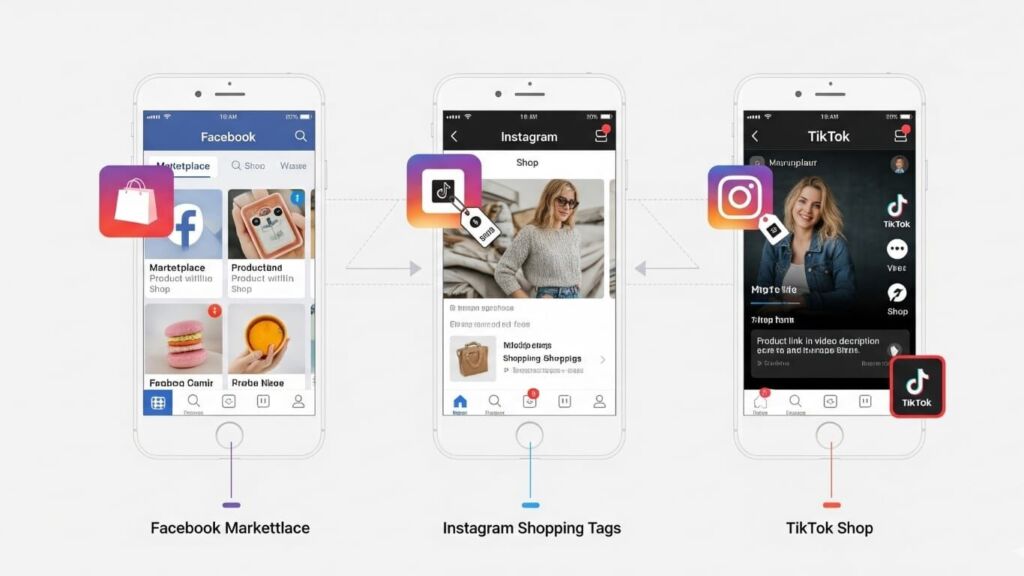
Facebook makes social shopping seamless with features like Facebook Shops, Messenger integration, and in-app checkout. It also enhances engagement through Marketplace visibility and personalized messaging, helping businesses connect directly with customers in a more conversational way.
Instagram focuses on visually driven commerce with shoppable posts, Stories, Reels, a dedicated Shop tab, and live shopping options. Engagement is amplified through influencer collaborations, user-generated content, and creative visual storytelling that inspires purchase decisions.
TikTok combines entertainment with commerce by allowing product links in videos, creator-led promotions, and shoppable ads. Its strength lies in viral trends, authentic storytelling, and interactive challenges, making shopping feel natural and fun for users.
Each platform offers unique strengths. A multi-platform approach tailored to your audience’s behavior ensures broader reach and better ROI.
Benefits of Social Commerce for Brands

- Increased Conversion Rates: Streamlined shopping paths reduce drop-offs and enhance conversion.
- Stronger Brand Loyalty: Community engagement and social proof foster lasting relationships.
- Higher Visibility: Discovery-driven platforms expose brands to new, interested audiences.
- Real-Time Engagement: Live shopping and interactive content create immediacy and excitement.
- Valuable Insights: Social platforms provide analytics that inform future product and content decisions.
Key Takeaways
- Social commerce is redefining online shopping by integrating product discovery, engagement, and transactions into a single platform experience.
- Platforms like Facebook, Instagram, and TikTok offer advanced tools for in-app shopping, catalog syncing, and customer interaction.
- Effective social commerce strategies include influencer marketing, user-generated content, flash deals, and real-time engagement.
- With growing consumer trust in social proof and the convenience of in-platform checkout, brands that embrace social commerce position themselves for scalable success.
Conclusion
As digital behaviors continue to evolve, social commerce presents a golden opportunity for businesses to align their marketing, sales, and customer experience strategies. The ability to turn social media channels into direct sales engines not only improves conversion rates but also nurtures loyal communities around brands.
By leveraging platform features, optimizing content, and engaging audiences through interactive experiences, brands can transform their social media presence into a powerful revenue-generating asset. Investing in smart social commerce strategies today will secure a competitive edge in tomorrow’s marketplace.